LoRa APRS Tracker for SOTA Hiking: Long-Range Position Tracking Without Subscription Fees
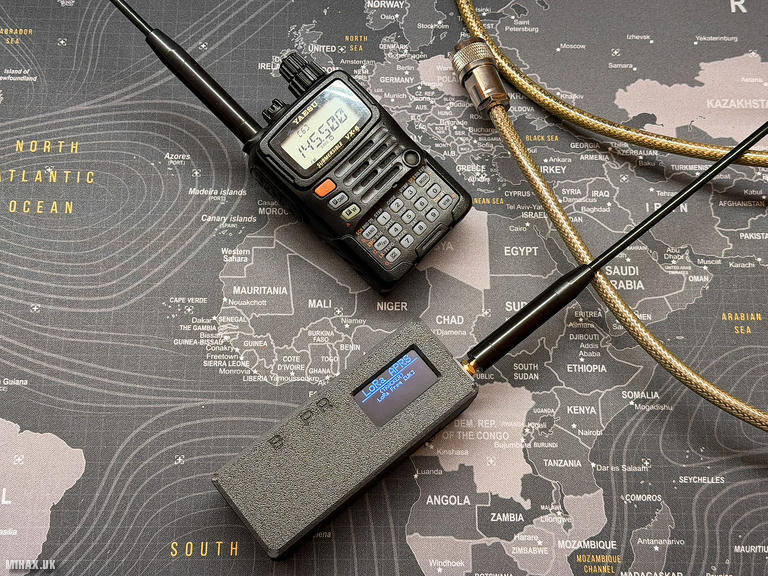
Remote summits and rural hillwalking routes typically suffer from poor or non-existent mobile phone data signal, making smartphone-based position tracking unreliable at best. Even when signal is available, GPS tracking apps drain battery rapidly, and keeping your phone charged for emergency calls should always take priority. LoRa APRS solves this problem elegantly, combining two proven technologies to give me real-time GPS position tracking that works anywhere I can reach an amateur radio gateway, with no subscription fees and battery life measured in days rather than hours. My position appears on publicly accessible tracking websites such as aprs.fi within seconds, visible to anyone worldwide, using hardware that costs around £70 and weighs very little.
Why LoRa APRS for Off-Grid Position Tracking?
The challenge of staying connected during my SOTA activations is one that every hill-goer understands. Commercial solutions like the Garmin inReach work well but demand ongoing subscription fees. LoRa APRS offers an alternative: hardware you own outright, running on amateur radio infrastructure maintained by the hobbyist community, and with no monthly costs.
What is APRS? Understanding Amateur Radio Position Reporting
APRS, the Automatic Packet Reporting System, dates back to the 1980s when Bob Bruninga WB4APR first developed it for real-time tracking and situational awareness during emergencies and public service events. Traditional APRS operates on VHF (144.800 MHz in Europe) transmitting position data using 1200 baud audio tones over FM radio. Whilst effective, traditional APRS equipment typically uses 5-50 watts of power, meaning sometimes bulky radios and substantial batteries that simply aren’t practical for hiking or backpacking.
The system uses a mesh of radio repeaters (‘digipeaters’) and internet gateways that forward position reports to APRS-IS, the global APRS Internet backbone, where sites like aprs.fi display tracks in real-time. In this context, digipeaters are static LoRa APRS stations typically with larger antennas and/or more powerful radio transmitters. These devices receive and then retransmit the LoRa APRS messages, helping lower power devices such as my tracker below reach more stations. iGates are similar to digipeaters except they are Internet connected (perhaps via local WiFi, or LTE modem, etc.) and forward RF traffic to the APRS-IS.
How LoRa Chirp Spread Spectrum Achieves 100km+ Range
LoRa (‘Long Range’) is a wireless technology developed by Semtech Corporation that uses chirp spread spectrum modulation, a technique originally designed for radar systems. Here’s where the physics gets interesting: traditional AFSK APRS needs a strong, clean signal above the noise floor to decode successfully. When I’m transmitting from a summit with a typical 5-watt handheld, that signal strength drops rapidly with distance, and subsequently the receiver either hears me clearly or not at all. LoRa takes a completely different approach. Chirp spread spectrum spreads my signal across the entire 125 kHz bandwidth using frequency sweeps (chirps) that change over time. The clever bit is that LoRa receivers can decode signals up to 20 dB below the noise floor by correlating the received chirp pattern with the expected one. This means I can transmit at just 100 milliwatts (0.1 watts, one-fiftieth the power of that 5-watt handheld) and reliably reach distances exceeding 100 kilometres from an elevated summit position.
Weight and Power Comparison: LoRa APRS vs Traditional APRS for Hiking
The practical difference for hiking is significant. A traditional APRS setup requires a high-end handheld transceiver, a substantial battery, and a sizeable antenna. I’m looking at 500-700 grams minimum. My LoRa APRS tracker weighs around 140 grams complete with the battery and antenna. My chosen 4000mAh battery would provide perhaps 4-6 hours on a 5-watt APRS handheld transceiver, but will run my LoRa tracker for several days of continuous position beaconing. When I’m counting every gram for a long hike or multi-day trek and don’t want to carry spare batteries, LoRa APRS gives me better range with a fraction of the weight and power consumption. The processing gain from spreading the signal across that wider bandwidth more than compensates for the reduced transmit power, which is why I can reach iGates (internet-connected receivers operated by fellow amateur radio enthusiasts) 100+ kilometres away whilst my traditional APRS handheld might struggle beyond 30-40 kilometres at the same power level.
UK LoRa APRS Frequency and Technical Specifications
LoRa APRS marries these technologies by replacing traditional AFSK modulation with LoRa’s chirp spread spectrum whilst maintaining compatibility with the existing APRS infrastructure. In the UK, LoRa APRS operates on 439.9125 MHz (different from the European standard of 433.775 MHz to avoid conflicts with the UK band plan) using Spreading Factor value of 12, 125 kHz bandwidth, and Coding Rate value of 4. When my tracker transmits a position beacon, nearby iGates pick up the signal and forward it to APRS-IS. Within seconds, my callsign appears on sites like aprs.fi with my exact GPS coordinates, altitude, and a breadcrumb trail showing my route. My friends, family, and SOTA enthusiasts can monitor my progress without needing any equipment or specialist knowledge: they simply enter my callsign on a suitable tracking website and watch my journey unfold.
Building a LoRa APRS Tracker: LilyGO T-Beam Setup Guide
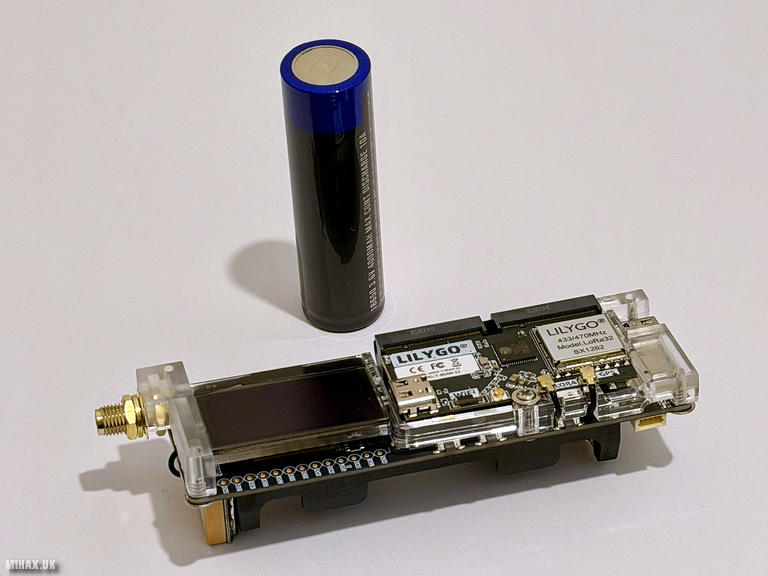
For my own LoRa APRS tracking device, I’ve gone with the LilyGO T-Beam Supreme, which I purchased directly from LilyGO for about £45. This board is a significant step up from the earlier T-Beam models, featuring an ESP32-S3 processor, Semtech SX1262 LoRa modem, and integrated GPS receiver supporting multiple GNSS constellations (GPS, GLONASS, Galileo, and BeiDou). The board includes a 0.96-inch OLED display for status information and an 18650 battery holder built directly into the PCB. The board also includes a basic ‘rubber ducky’ SMA antenna, however I am currently experimenting with using other antennas such as the Diamond SRH771.
You may have heard of Meshtastic, which is commonly associated with T-Beam devices and other LoRa hardware. Whilst Meshtastic also uses LoRa radio technology, it’s an entirely different protocol with its own firmware and software ecosystem. Meshtastic is designed primarily for off-grid mesh messaging between devices in a local area, rather than sharing your position to the global APRS-IS network. For walkers and hikers wanting family to track their location remotely via the internet, LoRa APRS with the firmware by CA2RXU is the appropriate choice.
Weather-Resistant Case for Mountain Environments
To protect the board and make it suited for outdoor use, I housed it in a 3D-printed case called the TacBeam Supreme from LayerFabUK on Etsy, which cost £15. This case is specifically designed for the T-Beam Supreme and provides good protection whilst keeping the antenna connector, USB-C port, and buttons accessible. The design is robust enough for the knocks and bumps of hillwalking, and the case includes hook-and-loop strap mounting points for attaching it to bags or webbing. In the near future I’ll be adding a thin piece of clear plastic over the screen opening for better weather resistance.
TacBeam Supreme 3D printed case: weather-resistant protection for mountain hiking and SOTA activations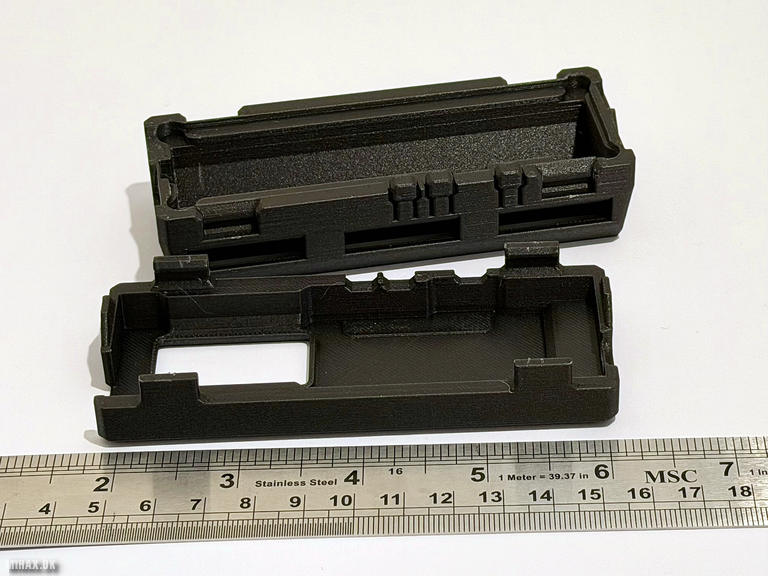
For power, I’m running an unbranded 4000mAh 18650 flat-top battery that I sourced from a UK-based online vape parts supplier for just £8. This might seem an unusual source, but vape suppliers stock high-quality 18650 cells at competitive prices. The 4000mAh capacity gives me excellent runtime: with position beacons every few minutes, I can easily get several days of continuous tracking from a single charge. The flat-top design is essential as the T-Beam Supreme’s battery holder is designed for this format rather than button-top cells. The LilyGO T-Beam can recharge the cell via its USB connector which also means solar recharging while backpacking is straightforward.
After quickly assembling the unit, it must be programmed using the open source firmware created by Ricardo Guzman CA2RXU, which is available on GitHub. This software uses a browser-based programming tool, and setting up the device was simply a case of following the setup steps in the instructions provided. Configuration was easy, making virtually no changes to the defaults, except setting my regional callsigns in the three available APRS option ‘slots’.

The total cost for my complete LoRa APRS tracking setup breaks down as follows:
| Component | Cost |
|---|---|
| LilyGO T-Beam Supreme | £45 |
| TacBeam Supreme case | £15 |
| 4000mAh 18650 battery | £8 |
| Total | £68 |
For comparison, the SOTA LoRa APRS Tracker available from the SOTA shop is another excellent option, built around the Heltec Wireless Tracker board with an integrated 2000mAh LiPo battery and bespoke 3D-printed case. Both solutions offer similar functionality, with the choice largely coming down to personal preference regarding battery type (replaceable 18650 vs integrated LiPo) and form factor.
LoRa APRS for SOTA Activators
For SOTA activators, LoRa APRS offers unique advantages beyond simple position tracking. The APRS2SOTA gateway allows me to self-spot on SOTAwatch directly via APRS messages, eliminating my dependence on patchy mobile data coverage at summit locations. This is achieved by using the Bluetooth capability on the LilyGO T-Beam Supreme board to connect it to my mobile phone for data input. Chasers watching my track can see me approaching the activation zone and prepare for contact, whilst the position history confirms I was within the required summit area. I’ve seen several UK operators document ranges exceeding 200 kilometres from summit positions using just 100mW, and the network of volunteer iGates continues expanding, particularly in popular SOTA areas like the Peak District, Lake District, and Welsh borders where enthusiast operators understand the value of good coverage.
An example of LoRa APRS community infrastructure: The icy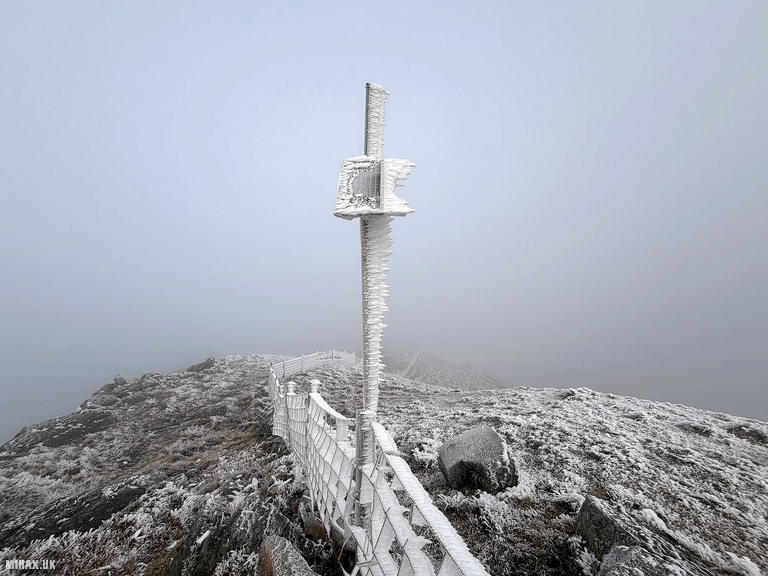
MB7UBL-2 digipeater station on Arenig Fawr in Snowdonia managed by Ben GW4BML.Final Thoughts
Getting started requires only an amateur radio licence (Foundation level is sufficient for the 100mW power limit), suitable hardware like the LilyGO T-Beam Supreme setup described above (around £68 complete with case and battery), and the free CA2RXU firmware that handles everything from GPS acquisition to APRS-IS connectivity. Unlike satellite trackers such as the Garmin inReach that demand ongoing subscription fees, LoRa APRS costs nothing to operate once I’ve purchased the hardware, and I’m benefitting from the amateur radio community’s infrastructure rather than paying a commercial service.
Keeping in mind the fact that whilst LoRa APRS is free to use, the infrastructure is not free to maintain, I would like to contribute back to the community in some way in the future, probably by establishing my own digipeater or iGate service. Another idea I am keen to explore is running a digipeater from my car while on the hill to improve my coverage.
For hikers who want friends and family to follow their adventures in real-time, LoRa APRS represents exactly the kind of innovative, low-power, long-range solution that makes amateur radio continuously relevant in the 21st century.
Frequently Asked Questions
Do I need an amateur radio licence for LoRa APRS?
Yes, LoRa APRS operates on amateur radio frequencies (439.9125 MHz in the UK) and requires at least a Foundation licence. The good news is that the Foundation licence exam is straightforward and can often be completed in a single weekend through local radio clubs. The 100mW power limit used by most LoRa APRS trackers is well within Foundation licence privileges.
What is the range of LoRa APRS?
From a summit or elevated position, ranges of 100-200+ kilometres are regularly achieved with just 100mW of transmit power. Earlier this week on a hike up Arenig Fawr in Snowdonia, my LoRa tracker’s furthest contact was with M0XXM-10 a station 278km away in Norfolk. In valleys or urban areas, range will be more limited and depends on line-of-sight to the nearest gateway or repeater. The LoRa APRS coverage map shows active iGates in your area.
What frequency does LoRa APRS use in the UK?
The UK uses 439.9125 MHz for LoRa APRS, which differs from the European standard of 433.775 MHz. This is to avoid conflicts with the UK amateur radio band plan. Make sure any tracker you purchase or build is configured for the correct UK frequency.
How does LoRa APRS compare to Meshtastic?
Both use LoRa radio technology, but they serve different purposes. LoRa APRS integrates with the established APRS-IS network, meaning your position appears on APRS websites like APRS Track Direct and is visible worldwide via the internet. Meshtastic creates local mesh networks for off-grid messaging between devices. For hikers wanting to share their location remotely, LoRa APRS is generally the best choice. For group communications in remote areas, Meshtastic excels.
Can I use LoRa APRS to send messages?
Yes, the APRS protocol supports two-way messaging in addition to position tracking. You can send and receive short text messages via the APRS network, including automated messages to services like APRS2SOTA for self-spotting on SOTAwatch.
What battery life can I expect?
With a 4000mAh 18650 battery and typical beacon settings (position report every 2-5 minutes whilst moving), expect 2-4 days of continuous operation. Battery life varies depending on beacon interval, GPS acquisition time, and temperature. In cold conditions, lithium batteries lose capacity, so carrying a spare is wise for multi-day trips.
If you found this content valuable, why not Buy Me a Coffee?